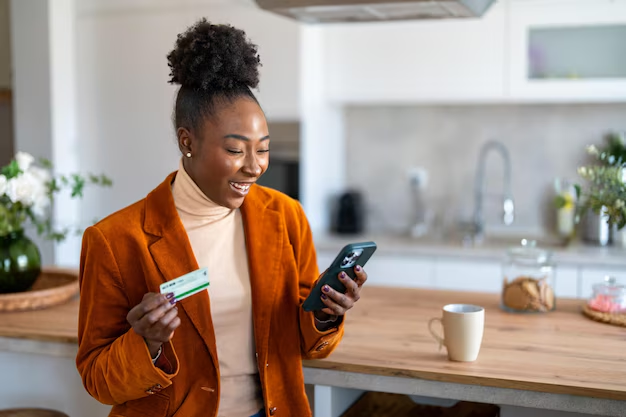
Sending Money Abroad with Just Your Phone: A Practical 2025 Guide
You no longer need to visit a bank branch, fill out long paper forms, or wait in line to send money overseas. Today, you can transfer money internationally using only your smartphone—often in minutes and from almost anywhere.
Whether you’re supporting family, paying an overseas freelancer, or settling travel expenses, understanding how mobile international transfers work can help you save time, reduce fees, and avoid costly mistakes.
This guide walks you through the essentials: how these transfers work, what to watch for with fees and exchange rates, key security basics, and a step‑by‑step walkthrough of sending money abroad from your phone.
How International Money Transfers from Your Phone Actually Work
When you send money internationally using a smartphone app, a few things almost always happen behind the scenes:
You fund the transfer
- From your bank account
- With a debit or credit card
- Using a mobile wallet or digital balance
The app converts your money into another currency
Your local currency (for example, USD) is exchanged into the recipient’s currency (for example, EUR or INR). This involves:- An exchange rate
- Often an exchange margin (a small difference between the market rate and the rate you receive)
The money is delivered to your recipient
Common delivery options include:- Bank deposit into the recipient’s bank account
- Mobile wallet credit
- Cash pickup at a local partner location
- Card-to-card transfer in some regions
The service charges fees
These may be:- A fixed fee
- A percentage of the transfer amount
- A combination of both
- Or built into the exchange rate markup
Understanding these steps helps you compare options and spot where costs and delays are likely to occur.
Key Factors to Consider Before Sending Money Internationally
Before you tap “Send,” it helps to understand the trade‑offs between speed, cost, and convenience.
1. Fees: More Than Just a Service Charge
When comparing international money transfer apps, people often look at the visible fee and ignore the rest. In practice, you may encounter:
Transfer fees
- Fixed amount per transaction
- Percentage of your transfer
- Tiered pricing (larger transfers may have different fees)
Exchange rate margin
Many services make money by offering an exchange rate slightly less favorable than the market rate. Even a small difference can matter on large transfers.Receiving bank fees
In some countries, the recipient’s bank may charge an incoming transfer or foreign currency conversion fee.Card or funding fees
Paying with a credit card can sometimes be processed as a cash‑advance‑type transaction, which may involve extra charges from your card issuer.
💡 Fee‑Awareness Tip
Always check:
- The quoted exchange rate
- The total charged amount in your currency
- The exact amount the recipient will receive
This full picture is usually more meaningful than the listed service fee alone.
2. Exchange Rates: Why They Matter So Much
The exchange rate determines how much foreign currency your recipient gets for each unit of your currency. Small differences in the rate can have a noticeable effect on the total received.
Key points:
Mid‑market rate vs. customer rate
- The mid‑market rate is what you might see on financial news sites or currency converters.
- The customer rate you receive in a transfer app may be slightly different to include a margin.
Real value vs. promotional talk
- A “no fee” transfer may still involve an exchange rate margin.
- A higher visible fee with a stronger exchange rate can sometimes be better overall.
📊 Quick Comparison Example (Conceptual)
| Scenario | Visible Fee | Exchange Rate Quality | Likely Outcome |
|---|---|---|---|
| Low fee, weak rate | Low | Unfavorable | Recipient may get less money |
| Higher fee, strong rate | Higher | More favorable | Recipient may get more money |
Checking both elements helps you choose an option that maximizes the recipient’s final amount.
3. Speed: Instant Isn’t Always Guaranteed
Many mobile transfer services aim for fast delivery, but timing still depends on several factors:
Funding method
- Debit card or mobile wallet: often faster, sometimes close to real‑time
- Bank transfer: can take longer due to bank processing cycles
Receiving method
- Mobile wallet or cash pickup: may be available more quickly once processed
- Bank deposit: timing varies by country and bank systems
Country and corridor
- Some currency routes are heavily used and tend to be processed faster.
- Less common routes or countries with additional compliance checks can take longer.
⏱️ Timing Tip
If the transfer is urgent, consider:
- Whether instant or same‑day delivery is realistically available
- If not, sending earlier to account for normal processing delays
4. Security and Regulation
When sending money internationally through a smartphone, security is a core concern.
Common safeguards used by regulated money transfer services include:
- Identity verification (know‑your‑customer checks)
- Encryption of data in transit and at rest
- Fraud monitoring systems that flag unusual transactions
- Compliance checks against sanction lists and anti‑money‑laundering rules
From your side, you can help protect your transfers by:
- Using strong, unique passwords
- Enabling two‑factor authentication (2FA) wherever available
- Avoiding public Wi‑Fi when sending sensitive financial information
- Keeping your phone’s operating system and apps updated
🔐 Security Snapshot
- ✅ Prefer apps from regulated financial institutions or licensed providers
- ✅ Double‑check recipient details before confirming
- ✅ Review transaction notifications for any unfamiliar activity
Step‑by‑Step: How to Send Money Internationally Using Your Smartphone
The exact steps vary by app and country, but the overall process tends to follow a similar pattern.
Step 1: Choose a Reputable App or Service
When selecting an international money transfer app, people often consider:
- Supported countries and currencies
- Fee structure and exchange rates
- Reputation and user feedback
- Ease of use and language options
- Customer support availability
To stay neutral and informational, it’s enough to say: there are multiple well‑known providers in this space, including traditional banks with mobile apps and specialized money transfer platforms. Many users compare a few options before selecting one that matches their needs.
Step 2: Set Up Your Account
After downloading the app:
Register with your personal details
- Name, address, date of birth, email, phone number
Verify your identity (when required)
- Upload or scan a government ID
- Take a selfie or short video if prompted
- Provide additional documents (like proof of address) for higher limits
Secure your login
- Create a strong password
- Enable biometric login (fingerprint or face recognition) on your device if you prefer and your device supports it
- Turn on 2FA if available
This process helps the service comply with legal requirements and can also help protect you from unauthorized use.
Step 3: Add a Payment Method
Most international transfer apps let you fund your transfer from:
- Bank account
- Debit card
- Credit card (sometimes with extra fees)
- Mobile wallet or stored balance
When adding a method, you may be asked to:
- Enter card details or bank account information
- Complete a micro‑deposit verification (small temporary charges or deposits)
- Approve the connection in your bank’s own app or SMS
⚙️ Practical Funding Tips
- Many users prefer debit cards or bank accounts for straightforward fees.
- Credit cards can offer flexibility but may involve cash‑advance‑like fees or higher charges from your card issuer.
Step 4: Set Up the Recipient
To send money, you’ll generally need:
- Recipient’s full name (as it appears on their official documents)
- Country and sometimes address
- Receiving method details, such as:
- Bank name and account number
- IBAN and SWIFT/BIC codes for many international bank transfers
- Mobile wallet number or user ID
- For cash pickup: the recipient’s name and ID details as required
🎯 Accuracy Matters
Errors in spelling, numbers, or codes can delay your transfer or send funds to the wrong place. Many users:
- Copy‑paste account details when possible
- Double‑check one character at a time before confirming
Step 5: Enter Amount, Review Fees, and Choose Delivery Options
This is where you define the transfer details:
Choose currencies
- “Send from” currency (yours)
- “Receive in” currency (the recipient’s)
Enter amount
- Either the amount you want to send
- Or the amount you want the recipient to receive
Review
- Transfer fee (if displayed separately)
- Exchange rate being applied
- Estimated arrival time or delivery window
- Whether any additional charges might apply on the recipient’s side
📌 Before You Tap Confirm
- Make sure the “Recipient gets” value matches your expectations.
- If timing matters, check whether the estimated delivery time meets your needs.
- Take a screenshot of the summary screen if you like to keep your own record.
Step 6: Confirm, Pay, and Track
Once everything looks correct:
Authorize the payment
- This may involve a password, biometric check, or a one‑time code from your bank.
Receive a confirmation
- The app usually shows a reference number or transaction ID.
Track the transfer
- Many apps provide real‑time or near‑real‑time status updates:
- “Processing”
- “Sent”
- “Completed”
- Many apps provide real‑time or near‑real‑time status updates:
Notify the recipient
- Let them know the transfer is on its way.
- For cash pickup, share any required reference code or instructions.
Common Ways to Receive Money Internationally (From the Recipient’s View)
From the recipient’s perspective, there are several popular ways to get money sent via smartphone apps.
1. Bank Account Deposit
How it works:
- Money is deposited directly into the recipient’s bank account.
- The recipient typically doesn’t need to take any action once details are set up.
Pros
- Convenient for recipients who already use a bank account
- Works well for larger transfers or regular support payments
Considerations
- Local bank processing times
- Potential receiving or conversion fees from the recipient’s bank
2. Mobile Wallets
How it works:
- Funds arrive in a mobile wallet app used in the recipient’s country.
- The recipient can then spend, transfer to another wallet, or cash out, depending on local options.
Pros
- Useful where mobile payments are widely used
- Can be faster than traditional bank deposits in some regions
Considerations
- Recipient must have a compatible mobile wallet
- Cashing out may involve additional steps or fees
3. Cash Pickup
How it works:
- Money is sent from your smartphone but collected in person by the recipient at a physical location (such as a partner agent, bank branch, or retail point).
Pros
- Helpful when the recipient doesn’t have a bank account or smartphone
- Often accessible in regions with limited digital infrastructure
Considerations
- Recipient must travel to a pickup point
- They usually need to show valid ID and sometimes a reference code
- Business hours and local availability can affect convenience
4. Card‑Based Receiving
In some areas, recipients can receive funds directly onto:
- A debit card
- A prepaid card
- A virtual card linked to a wallet
This method is less universal than the others but can be convenient where supported.
Safety, Scams, and Red Flags to Watch For
Sending money abroad from your phone is convenient, but it’s also an area where scams occur. Staying alert can help protect both you and your recipient.
Common Scam Patterns
Urgent, unexpected requests for money
- Messages claiming a relative is in trouble and needs immediate help
- Sudden pressure to send to a new account or unknown person
Romance or online relationship scams
- Someone you’ve only met online requesting money for emergencies, travel, or investment opportunities
Impersonation of officials or companies
- Messages pretending to be from tax authorities, immigration services, or delivery companies demanding immediate payment
Investment promises with guaranteed high returns
- Requests to pass money abroad as part of an “investment” or “business opportunity”
🚨 Safety Checklist Before Sending
- 🧾 Know who you’re sending to: ideally someone you personally know or have verified.
- 📞 Verify requests through another channel: call or message the person via a method you already trust.
- 🧠 Be cautious with emotional pressure: urgency and secrecy are common scam tactics.
- 🔍 Check account details carefully: unexpected changes in where to send money can be a warning sign.
If something feels off, many users decide to pause and confirm before sending.
Costs, Limits, and Practical Planning
International money transfers come with constraints. Understanding them can help you avoid surprise issues.
1. Transfer Limits
Most services have:
- Per‑transaction limits
- Daily or monthly caps
- Different limits based on:
- Your verification level
- Your funding method
- The destination country
If you plan a large transfer, you may need to:
- Complete additional identity verification
- Contact customer support
- Split the amount into several smaller transfers within allowed limits
2. Tax and Reporting Considerations
Cross‑border transfers can sometimes involve:
- Local reporting requirements for large transactions
- Recipient liability if the funds are treated as income
- Donor or gift‑related rules in some regions
Regulations vary widely by country. Many people consult local tax or legal professionals if they frequently send or receive large international transfers to understand how rules apply in their situation.
3. Planning Regular Transfers
If you send money regularly (for example, monthly support to family), you may find it helpful to:
- Choose a primary platform that supports your most common corridor
- Set calendar reminders for scheduled transfers you plan to initiate manually
- Monitor the exchange rate trend to understand normal fluctuations
- Keep a simple record of:
- Dates
- Amounts you send
- Amounts recipients receive
This kind of basic tracking can make it easier to spot unusual changes in fees, rates, or timing.
Quick Reference: Smart Habits for International Transfers 📌
Here’s a simple, at‑a‑glance list of practical habits many users find helpful:
📱 Use trusted apps only
- Download from official app stores and look for regulated providers.
🧩 Double‑check recipient details
- Names, account numbers, and codes must match exactly.
💱 Compare total cost, not just fees
- Look at both the transfer fee and exchange rate.
⏱️ Allow extra time
- Especially for first‑time transfers or bank‑to‑bank routes.
🔐 Secure your phone and accounts
- Use strong passwords, biometric locks, and 2FA where available.
🚫 Be cautious with strangers and unsolicited requests
- If someone you don’t know well is urging you to send money quickly, slow down and verify.
When Is a Smartphone Money Transfer a Good Fit?
Sending money internationally from your smartphone tends to work especially well when:
- You and your recipient both have reliable internet access
- The recipient has a bank account or mobile wallet in a supported country
- Speed and convenience are important, but you still want clarity on total cost
- You value clear tracking and digital records of each transaction
In contrast, if your recipient is in a location with limited mobile coverage or banking infrastructure, cash pickup or local solutions might still play a role, even if you initiate the transfer from your phone.
Bringing It All Together
International money transfer has shifted from paper forms and physical counters to apps that fit in your pocket. With a smartphone, you can:
- Set up a secure account
- Add funding methods
- Enter recipient details
- Compare fees and exchange rates
- Send and track transfers across borders
The key is not just using any app, but using it mindfully:
- Pay attention to the real cost, including the exchange rate.
- Protect yourself through basic security practices and scam awareness.
- Plan ahead for regular or larger transfers, especially when different countries’ rules may apply.
With a bit of preparation and awareness, sending money internationally using your smartphone can become a straightforward part of how you support loved ones, pay global partners, or manage life across borders—quickly, clearly, and with greater control over what truly matters: how much arrives on the other side.